
4 MIN READ
Most AI strategies are workflow problems
Before asking what AI can do for your business, it helps to know what your business actually does. Most bottlenecks turn out to be processes, not models.
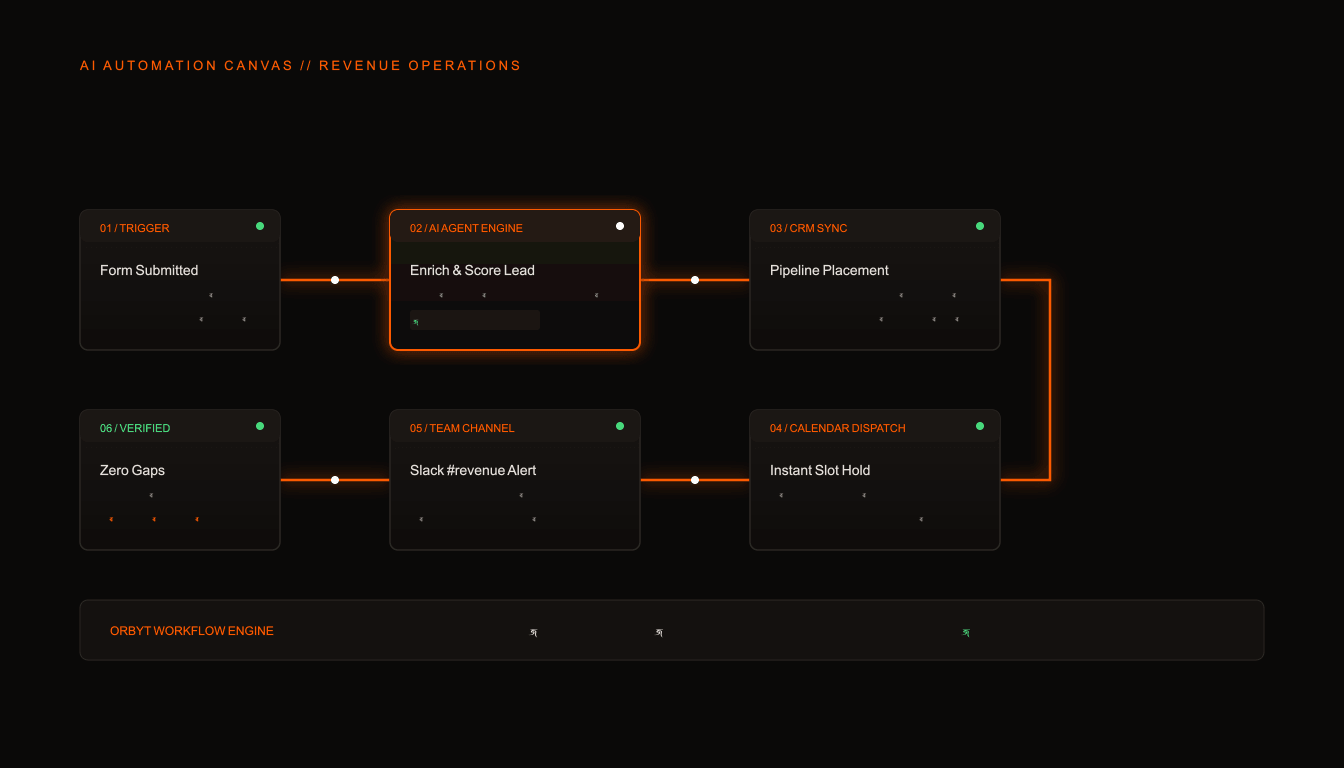
A founder recently told us they needed 'an AI strategy'. We asked one question: walk me through what happens after someone fills in your contact form. The answer took ninety seconds and involved three people, two inboxes, a Slack message that sometimes gets missed, and a spreadsheet updated 'when things calm down'.
Nothing in that story is an AI problem. Every part of it is a workflow problem. And that's the pattern we see almost every time a business says they want AI: the wish is for technology, but the pain lives in a process nobody designed on purpose.
The question behind the question
When someone says they want AI, they usually mean one of three things. They want to stop losing leads. They want to stop paying people to move data between tools. Or they're worried about falling behind and want to feel in control of that fear. All three are legitimate. None of them starts with a model.
So we start somewhere less exciting. We map what actually happens today. Who touches what, in which order, and where things stall. It's unglamorous work. It's also the only way to place AI somewhere it will still be helping a year from now.
Where AI genuinely helps
- First responses. A draft reply to every inbound lead within a minute, with a human approving anything sensitive.
- Repetitive data work. Extraction, enrichment, routing. The tasks that are too small to hire for and too important to drop.
- Internal answers. New team members asking the same questions, answered from the documents your company already wrote.
Notice what's missing: reinventing the business. AI placed on top of a broken process gives you a faster broken process. That's not transformation, that's acceleration in the wrong direction.
The honest test
Here's a test we use before automating anything. If the task disappeared tomorrow, would anyone miss the outcome? If the answer is no, delete it. If the answer is yes but nobody enjoys it, automate it. If the answer is yes and someone takes pride in it, give them better tools and leave them alone.
The goal was never to use AI. The goal is a team that spends its week on work that matters.
So before you ask for an AI strategy, ask for a workflow map. It's cheaper, it's faster, and there's a decent chance the bottleneck dissolves before any model gets involved. And if AI is the right answer, you'll place it with confidence instead of hope.
Next essay
Your tracking is probably lying to you