
4 MIN READ
A landing page is a system, not a page
It inherits your ads, your tracking, your CRM and your follow-up. Treat it alone and it will underperform alone.
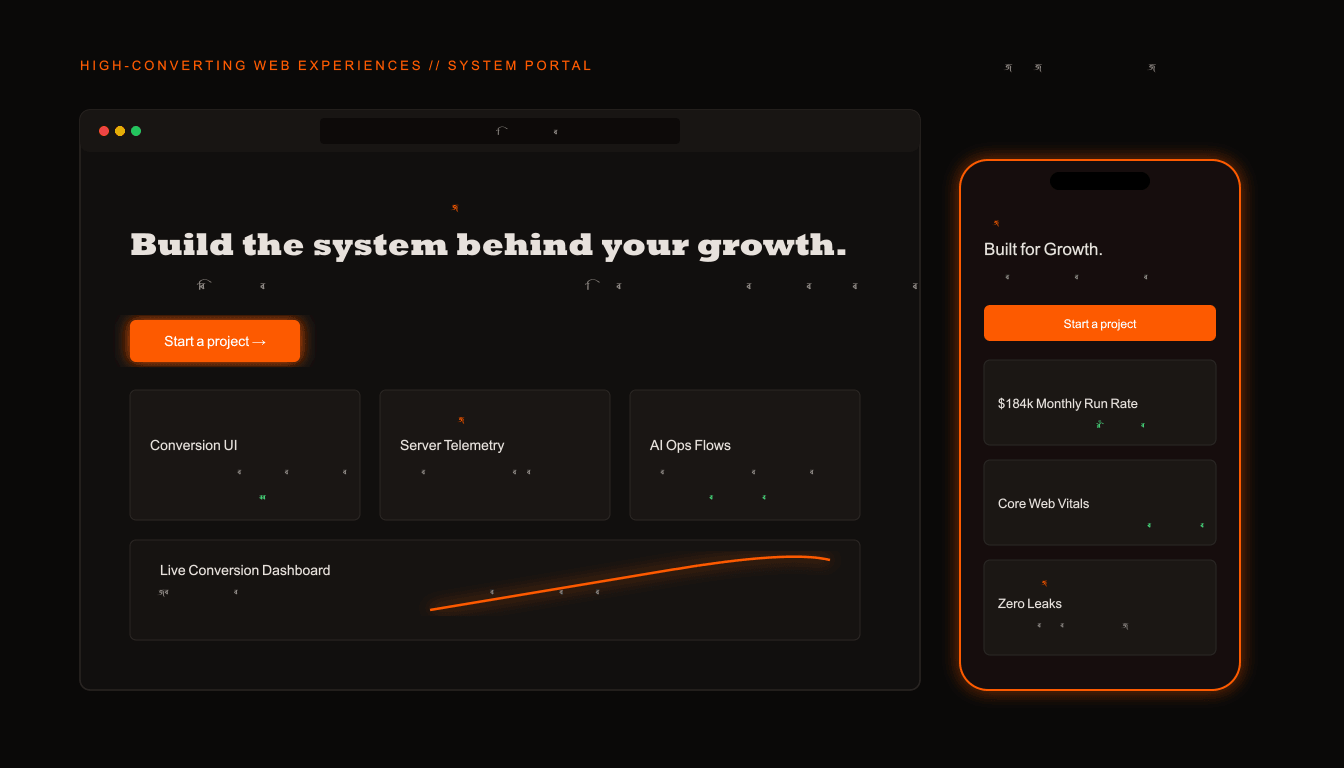
Someone sends you a link to a landing page and asks why it isn't converting. You open it. The headline is fine, the design is fine, the button is where buttons go. Everything about the page is fine. So you A/B test the headline, and the needle moves a percent or two, and the problem remains.
Here's the uncomfortable possibility: the page was never the problem. The page is one part of a system that includes the ad that brought the visitor, the speed at which the page loaded, the form that swallowed their details, and the follow-up that did or didn't happen. Judging the page alone is like judging a goalkeeper whose team never passes the ball.
The page inherits everything
A visitor arrives with a promise already made. The ad said one thing, the page says something slightly different, and that small mismatch costs you the conversion. The page loads in four seconds on their phone, and a third of them never see your headline at all. They submit the form and hear nothing for a day, and by then the feeling has passed. Every one of those failures gets recorded as 'the page didn't convert'.
- Message match: the ad's promise and the page's first line should be the same sentence in different words.
- Speed: on mobile, seconds are the first conversion factor, before any copy is read.
- Handoff: the form is a contract. What happens in the next five minutes decides whether the page 'worked'.
- Signal: if the conversion isn't tracked correctly, the platform optimizes toward the wrong visitors tomorrow.
Judging a landing page alone is like judging a goalkeeper whose team never passes the ball.
What we do instead
We build pages as part of the acquisition system. That means the page, the events, the routing and the follow-up are designed in one sitting, by people who can see all four. It also means measurement is honest enough to tell us which part of the chain actually failed, so improvement lands where it matters.
The next time a page underperforms, resist the headline test for a week. Trace the whole path instead, from the click to the follow-up call. The fix is usually waiting one step before or one step after the place everyone is looking.
Next essay
Disconnected tools are a silent tax